
CoLab 2026
Starts
Oct 30.
ETH Entrepreneur Club programme for researchers and builders.

Turning Research into Real-World Solutions.
CoLab matches each selected researcher with 3–4 students to turn deep-tech research into practical venture opportunities. Together, they work through a guided programme with experts from research, business, and entrepreneurship. Applications for researchers and students are now closed for the 2026 edition.
12 teams · 3–4 students per team · 2026 applications closed
01 / The programme
Your research.
A world of possibilities.
A team around your research. Practical workshops. Experienced mentors. A clear path to exploring what comes next.
- 01
Start with research
Selected PhDs and postdocs bring their research-driven challenges to CoLab.
- 02
Student teams form
Researchers collaborate with teams of 3–4 students with complementary skills.
- 03
Build and pitch
Kickoff is on October 30, followed by workshops and the final pitching competition on December 7.
Inside the programme
Planned workshops · late afternoons & evenings
Dates and formats may change. Teams arrange additional meetings flexibly.
02 / Beyond the lab
Ideas become real
when people connect.
Get to know the people turning research into impact, and find your place in the CoLab community.

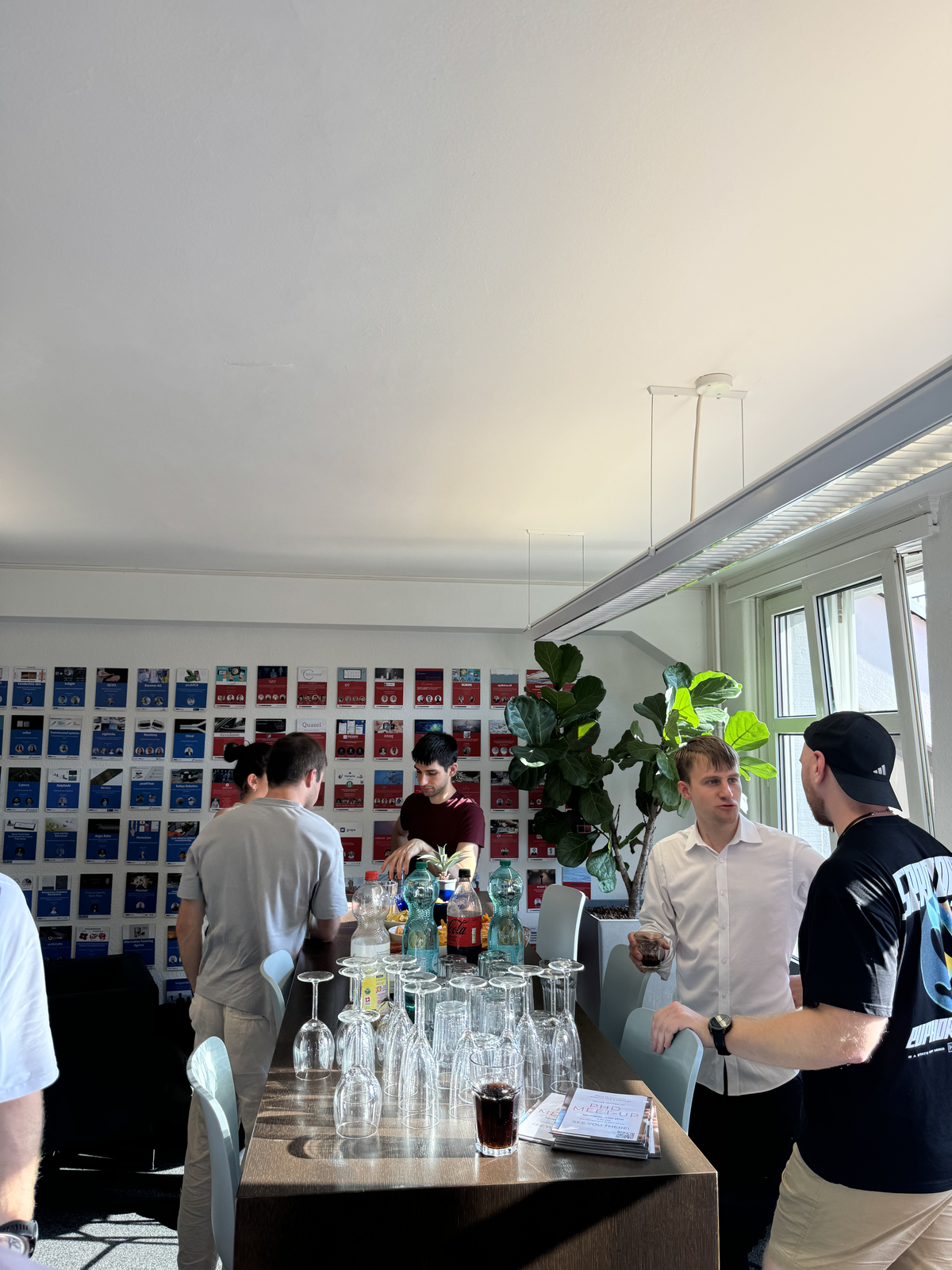
The people behind CoLab
Meet the organizing team
Students from the ETH Entrepreneur Club bringing CoLab to life.
Q&A
Frequently asked questions.
Everything you need to know before joining CoLab.
Who is CoLab for: researchers or students?
CoLab brings together two complementary groups: PhD researchers and postdocs who want to explore the entrepreneurial potential of their research, and students who want to work alongside them on research-driven venture opportunities. Researchers bring their research; students contribute their skills and interests to a team.
How advanced does my research need to be?
CoLab welcomes researchers at different stages, from early-stage PhDs exploring an idea to more advanced researchers with developed results or a prototype. You don’t need a finished research project or a working prototype to take part. The programme helps you explore the next entrepreneurial step from wherever you are.
Do I already need a startup?
No. You don’t need to have founded a company. CoLab helps you explore whether your research could become a venture.
Do I need business or entrepreneurship experience?
No. Our workshops introduce the knowledge and tools you’ll need throughout the programme. We also aim to build teams with complementary skills, including students who bring business or entrepreneurship experience.
Can I apply on my own?
Yes. You apply individually, and teams are formed as part of the programme, bringing researchers and students together.
What is the goal of the programme?
CoLab helps you explore the entrepreneurial potential of research together with a team. Through workshops, mentoring and feedback, you develop a research-to-business concept and present it at the final pitch. You don’t need to have founded a company to participate.
What kinds of projects do teams work on?
The 2026 cohort brings together 12 teams working on 12 research challenges. Topics range from healthcare and biotechnology to industrial applications, construction materials and cooling technology for AI chips. Each team explores how its research could create value beyond the lab.
What can I expect from mentoring?
The mentoring session on November 17 brings together founders, investors and subject experts. You can get feedback on your venture concept and discuss questions around product-market fit, pitching, financing, law and intellectual property. It is an opportunity to challenge assumptions and identify useful next steps for your team.
How much time should I commit?
Plan for around 5–7 hours per week. Programme meetings take place on Tuesdays and Thursdays, generally in the late afternoon or evening. Your team can organise its own additional meetings at any time that works for everyone.
How are teams formed?
Students can express their interests and submit preferences and rankings for the projects or teams they would like to join. The CoLab organising team makes the final assignments, taking preferences, interests and complementary skills into account. We aim to form balanced teams that create the greatest value for everyone involved; a first-choice placement cannot be guaranteed.
Do I have to share IP with the students in my team?
CoLab does not require researchers to transfer or share ownership of their existing intellectual property (IP) with student team members, either during the programme or afterwards. There is also no obligation to continue collaborating after CoLab. Researchers and students can agree how they want to handle IP and any future collaboration, subject to applicable university rules and existing agreements. Rights to new work created together should be clarified separately. The ETH Entrepreneur Club can help you work through questions and support the preparation of IP agreements.
Does participation cost anything?
No. Participation in CoLab is free of charge.
Does joining CoLab give CoLab or ETH rights to my project?
Participation in CoLab itself does not give CoLab or ETH equity in your venture or rights to your intellectual property (IP). CoLab is an initiative of the ETH Entrepreneur Club. Separate ETH rules and agreements may apply to your research, employment, use of ETH infrastructure, or the creation of an ETH spin-off. These can include IP ownership, licensing and equity requirements, independently of CoLab participation. Contact ETH transfer to clarify what applies to your project.
Read ETH’s IP regulationsHave participants gone on to develop ventures?
Yes. One example is RepliClouds, led by first-edition participant Mayur Sapkal. In our interview, he shares how CoLab helped him take concrete steps towards commercialising his research.
Read the RepliClouds storyCoLab 2026
Applications are closed.
Thank you for your interest. Researcher and student applications for the 2026 edition have now closed.
Supported by our club sponsors